EN
EN DE
DE FR
FR ES
ES PT
PT RU
RU AR
AR TR
TR UK
UK PL
PL RO
RO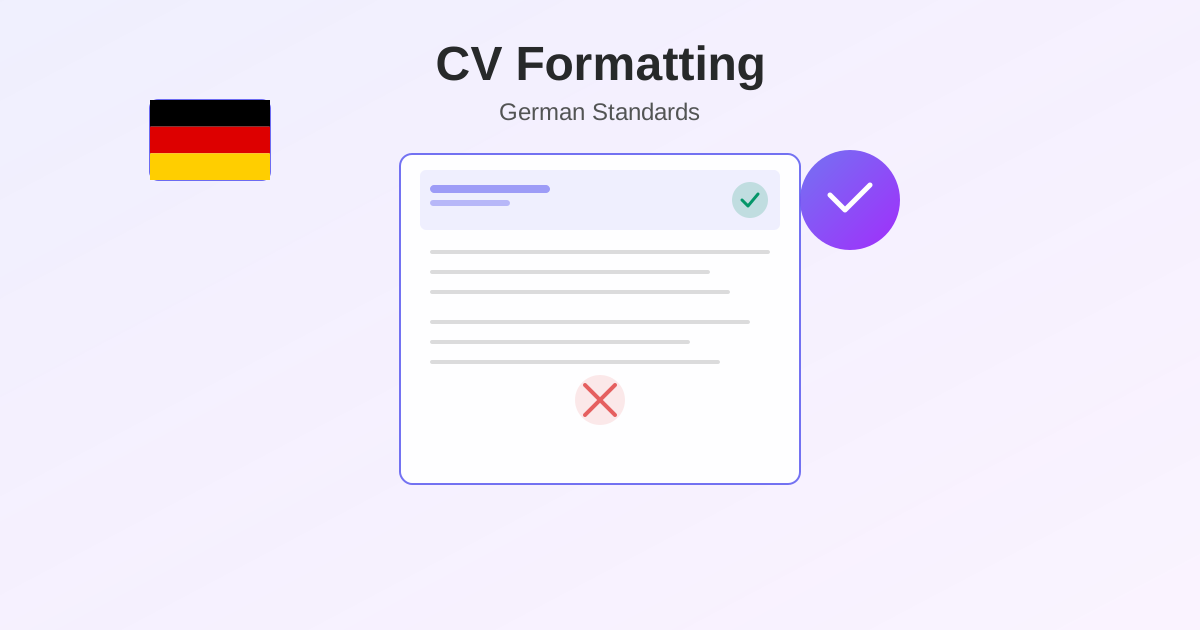
Why Your International CV Gets Rejected in Germany: The Hidden Formatting Rules That Matter
You've spent hours crafting the perfect CV. Your qualifications are impressive, your experience is solid, and you're confident this is the job for you. Yet weeks pass, and you hear nothing. Not even a rejection email. Sound familiar?
If you're an international student or professional seeking opportunities in Germany, you're likely facing a frustrating reality: German employers have specific, often unspoken expectations for CVs that differ significantly from other countries. Understanding these hidden rules could be the difference between landing your dream job and being silently passed over.
Key Takeaway
German CV formatting is more than just structure—it's a test of your understanding of German business culture. Small formatting mistakes can cause instant rejection, even if your qualifications are perfect.
The German CV Format: More Than Just Structure
German HR departments receive hundreds of applications for each position. With such high competition, they've developed strict criteria to quickly filter candidates. Your CV format isn't just about aesthetics—it's a test of your understanding of German business culture and attention to detail.
Common Mistakes That Lead to Instant Rejection
Important
These formatting mistakes can cause your CV to be rejected before anyone even reads your qualifications. Avoid them at all costs.
- Including a photo when it's not required (or omitting it when it is): While photos are becoming less mandatory, some traditional German companies still expect them. The reverse is also true—some modern companies view photos as unnecessary and potentially discriminatory. Researching the company culture helps, but there's no one-size-fits-all answer.
- Personal information overload: Including marital status, religion, or nationality—common in some countries—can actually work against you in Germany, as it may violate equal opportunity regulations or create unconscious bias.
- Incorrect date formats: Germans use DD.MM.YYYY format. Using MM/DD/YYYY (American) or other formats signals that you haven't adapted to German conventions.
- Missing certifications or unclear qualifications: German employers place high value on formal certifications, degrees, and professional qualifications. If your international degree isn't immediately recognizable, it may be discounted.
- ATS incompatibility: Many large German companies use Applicant Tracking Systems (ATS) that automatically filter CVs. If your CV isn't formatted correctly—using non-standard fonts, complex graphics, or incorrect structure—it may never reach human eyes.
The German CV Structure: What Goes Where
Unlike the creative, one-page CVs popular in some countries, German CVs follow a strict chronological structure that emphasizes:
- **Personal Information**: Name, address (in Germany), contact details, LinkedIn profile
- **Professional Summary**: A brief, factual overview of your career (optional but recommended)
- **Work Experience**: Reverse chronological order, with detailed descriptions of responsibilities and achievements
- **Education**: Formal qualifications, certifications, and relevant training
- **Skills**: Technical skills, languages (with proficiency levels), and soft skills
- **Additional Information**: Publications, awards, volunteer work, or hobbies (if relevant)
The Language Barrier Challenge
Perhaps the most significant challenge for international candidates is the language requirement. Many job postings require German proficiency, even for roles where English is the primary working language. Your CV must demonstrate German language skills clearly, using standard proficiency levels (A1-C2) that German HR professionals understand.
Even if you're fluent, writing a CV in German requires understanding business German conventions, professional terminology, and industry-specific language that differs from conversational German.
Cultural Nuances That Matter
German employers value precision, clarity, and efficiency. Your CV should reflect these values:
- Be specific, not vague: Instead of "worked on various projects," say "managed 5 client projects, increasing revenue by 15%"
- Use action verbs: German HR looks for concrete achievements and measurable results
- Keep it factual: Avoid overly creative language or marketing speak
- Show progression: Demonstrate how each role built upon previous experience
How Technology Can Bridge the Gap
The good news? You don't have to navigate this complex landscape alone. Modern tools can help you:
- **Format conversion**: Transform your international CV into German-standard format automatically
- **ATS optimization**: Ensure your CV passes through automated screening systems
- **Language translation**: Get professional business German translations that maintain your achievements' impact
- **Cultural adaptation**: Understand which information to include or exclude based on German expectations
Pro Tip
At Appliit, we've analyzed thousands of successful German job applications to understand exactly what works. Our AI-powered system doesn't just translate your CV—it adapts it to German business culture, ensuring every detail meets local expectations.
Your Next Steps
Before sending your next application:
- **Research the company's application preferences** - Check their website, job postings, and company culture
- **Get your CV professionally formatted for German standards** - Use tools that understand German CV conventions
- **Ensure all dates, formats, and structures follow German conventions** - Double-check date formats (DD.MM.YYYY), use German standards
- **Have your German language skills professionally assessed and documented** - Use standard proficiency levels (A1-C2)
- **Customize your CV for each application** - Highlight relevant qualifications for each specific role
Key Takeaway
Remember, a rejected CV isn't necessarily a reflection of your qualifications. Often, it's simply a format or cultural mismatch. By understanding and adapting to German CV standards, you're not just improving your chances—you're showing employers that you understand their business culture and are ready to integrate seamlessly.
The German job market rewards those who prepare. Take the time to understand these hidden rules, and turn your international background from a potential disadvantage into a unique strength that sets you apart.